
Trees add significant value to a property, but they also present risks when they become overgrown, damaged or too close to buildings. Simple pruning of smaller branches can sometimes be handled by a competent homeowner with the right tools and a clear understanding of what is safe. Beyond that point the work quickly becomes more complex. Large limbs, trees that lean toward structures, specimens with signs of disease or decay, and any work near power lines or at height all carry risks that increase sharply without proper training and equipment.
Attempting such work without the right skills increases the risk of injury, property damage and incomplete results. A branch that falls in the wrong direction can damage a roof, fence or vehicle. A cut made in the wrong place can leave the tree unstable or prone to future failure. Working at height without appropriate safety equipment and techniques exposes the person doing the work to serious injury. Legal considerations, including nesting bird protections and, in some cases, tree preservation orders, further complicate the picture. What begins as an attempt to save money can end in higher costs, liability and a less satisfactory outcome for the tree and the property.
First Cut Trees provides professional tree surgery, landscaping, fencing and grounds maintenance across Devon. The team of qualified arborists carries out pruning, crown reductions, removals, hedge work and vegetation clearance for residential and commercial clients. Safety, legal compliance and leaving sites clean are central to every job. The work is planned and executed with the training, equipment and insurance that complex tree work requires. Clients receive clear advice on what is necessary, what is advisable and what can safely wait, so that decisions are based on the condition of the trees rather than assumptions.
Professional assessment is particularly valuable when the condition of a tree is unclear. Signs of decay, fungal growth, cracks in the trunk or major limbs, and changes in leaf density or branch structure can indicate problems that are not obvious to the untrained eye. An arborist can evaluate the risk the tree poses to people and property and recommend the most appropriate course of action, whether that is careful pruning, reduction, or removal. Acting early often preserves more of the tree and reduces the scale of the work required later.
Work near buildings and power lines demands additional care. The direction of fall, the weight of the timber and the proximity of structures all have to be managed precisely. Sectional dismantling, the use of rigging equipment and controlled lowering techniques allow large trees to be removed safely in confined spaces. These methods require experience and specialist equipment that are not practical for most homeowners to acquire or use safely. Attempting the same work with ladders and basic saws significantly increases the chance of something going wrong.
Legal and seasonal considerations also influence the timing and method of work. Nesting birds are protected, and work that would disturb active nests is restricted during the breeding season. Tree preservation orders and conservation area rules can apply in some locations, requiring consent before certain work proceeds. A professional team is familiar with these
requirements and can advise on the correct approach, reducing the risk of unintended breaches.
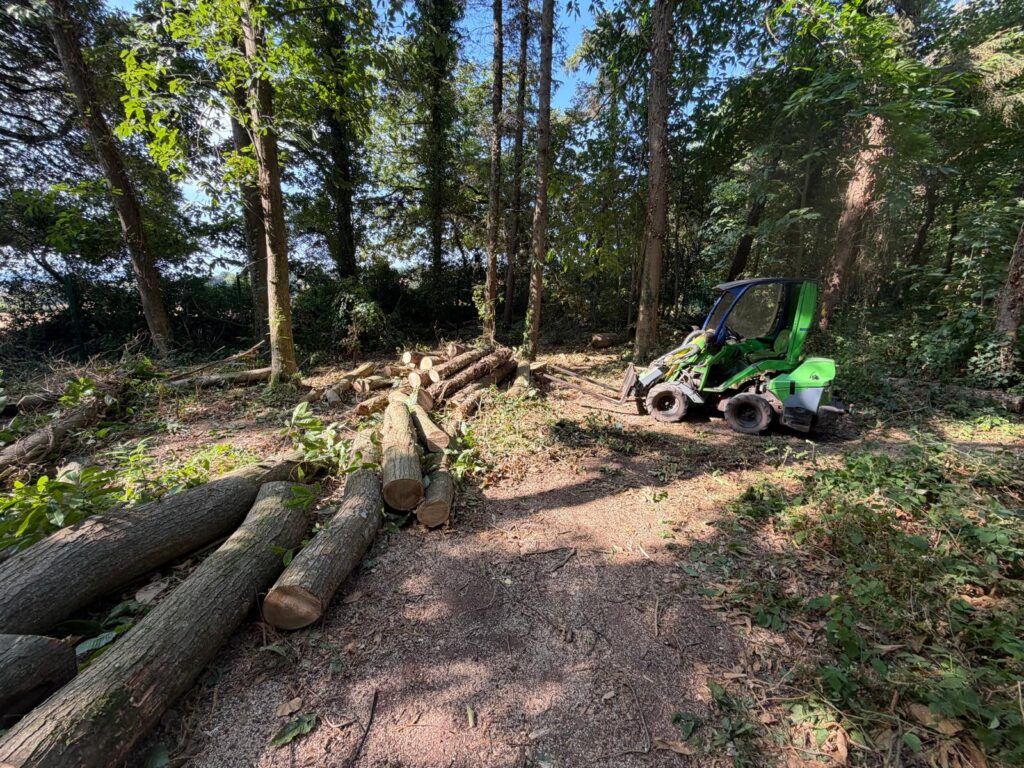
First Cut Trees places emphasis on leaving sites clean and tidy. Tree work inevitably produces arisings, and the way these are handled affects the overall experience for the client. Timber, branches and smaller material are cleared properly, and the site is left in a condition that allows the rest of the garden or grounds to be used without further disruption. This practical attention to detail is part of the difference between a professional job and an incomplete one.
The same team also carries out related landscaping, fencing and grounds maintenance. This allows clients who need more than tree work alone to coordinate different elements of a project under one organisation. Hedge reduction or removal, vegetation clearance and associated fencing or landscaping can be planned together so that the finished result is coherent and the site is left ready for the next stage of use or planting.
Free no-obligation quotations and honest advice help clients decide the right course of action. Not every tree that looks large or untidy requires major work. Some benefit from selective pruning that improves structure and reduces risk while retaining the tree’s contribution to the property. Others may need more significant intervention. Clear information about the options, the reasons for any recommendation and the expected outcome allows property owners to make informed decisions without pressure.
Whether the need is careful pruning, full removal or ongoing maintenance, professional assessment is the sensible first step when the work moves beyond basic upkeep. The line between manageable DIY and unnecessary risk is crossed more easily than many people expect. Height, weight, proximity to structures and the health of the tree all change the level of risk involved. When those factors are present, the training, equipment and insurance of a qualified team provide a safer and more reliable route to a good result.
If you are unsure about the condition of trees or hedges on your property, or if work is required that goes beyond routine maintenance, contact First Cut Trees for advice and a free quotation. A professional assessment can clarify what is needed, what is safe to leave, and how the work can be carried out with proper regard for safety, the law and the finished condition of the site.